Buyer's guide, September 2026
How to pick the best math solver app for iPhone.
Every one of these apps looks identical in the App Store: a phone, an equation, a tick. Four things actually separate them once installed, and you can test all four in about five minutes. Here they are, with an honest note on where MathScans, which we build, does and does not win.
01
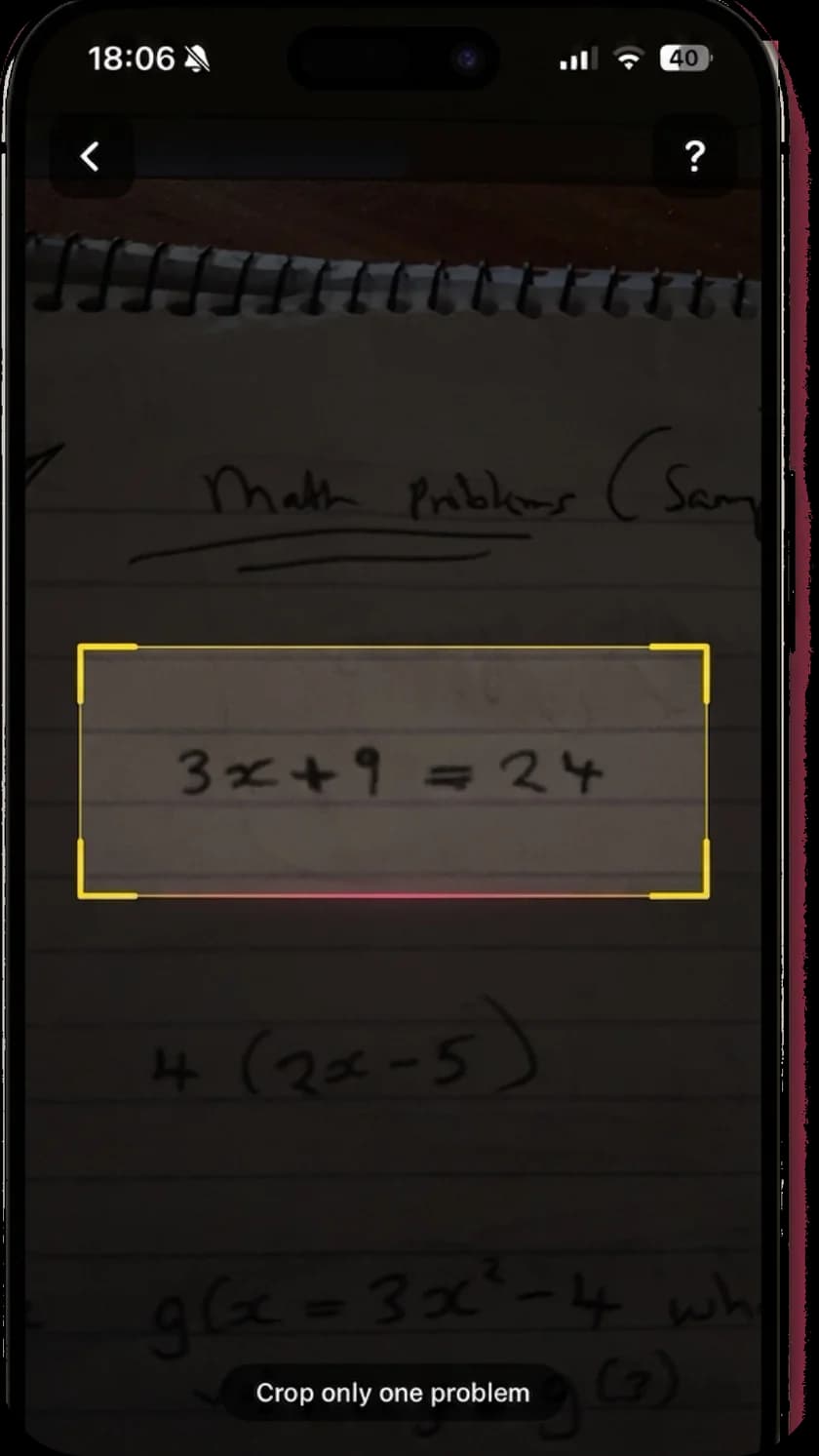
Does the camera read your handwriting, not just print?
Textbook print is the easy case and every app handles it. The real test is your own handwriting on lined paper at a bad angle in poor light. Before you commit, scan something genuinely messy and check that the equation the app reads back matches what you wrote. MathScans shows a confidence indicator and warns you before solving when a scan came out unclear, so you retake the photo instead of getting a confident answer to the wrong problem.
02
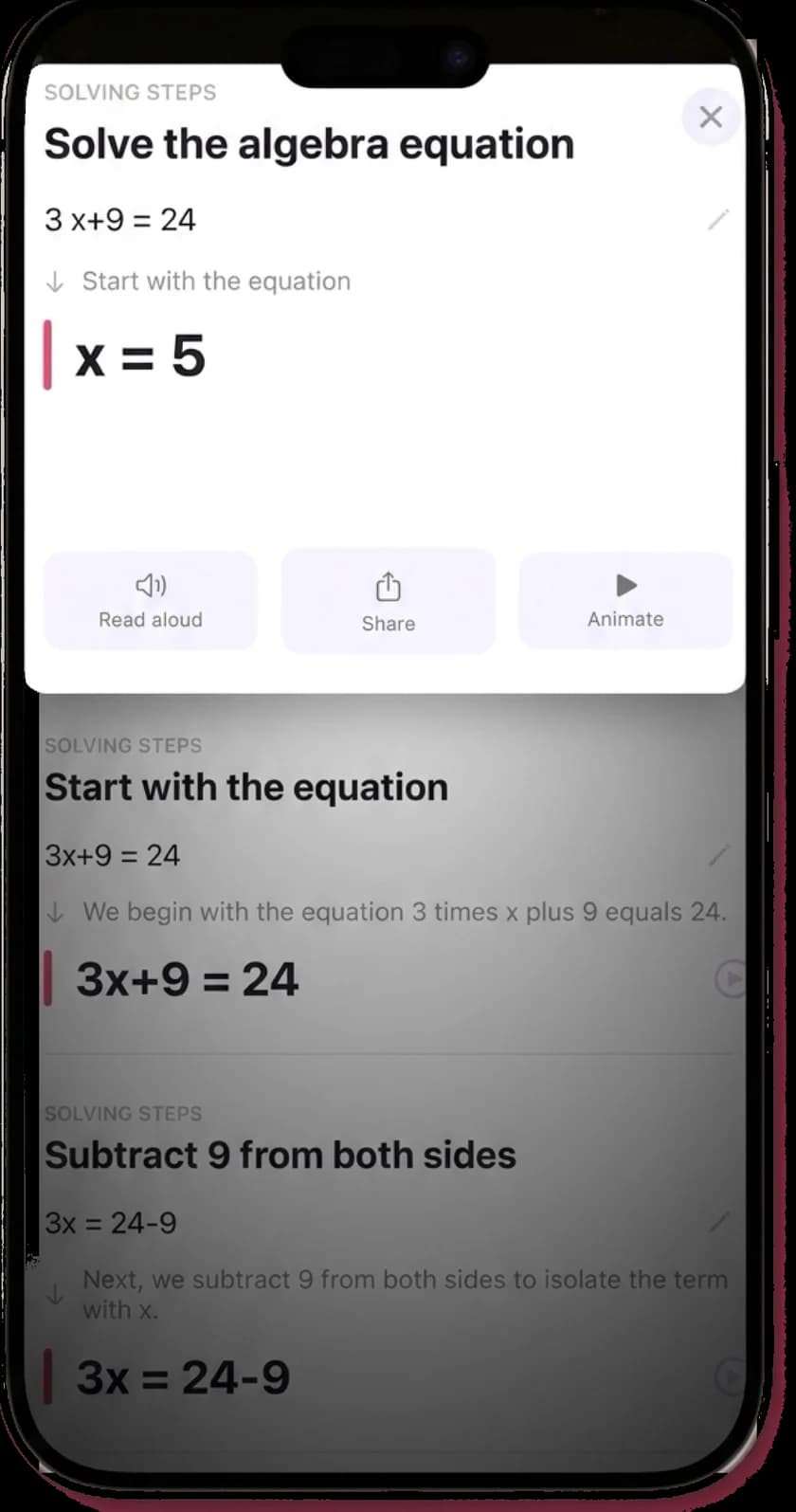
Are the steps explained, or just listed?
There is a large difference between a list of intermediate equations and an explanation. A list tells you that 3x = 24 − 9 came next. An explanation tells you that the constant is moved first, and that doing the same thing to both sides is what keeps the equation true. The second one is what you can reproduce in an exam. Check whether the app names the operation and gives a reason, or simply advances the algebra.
03
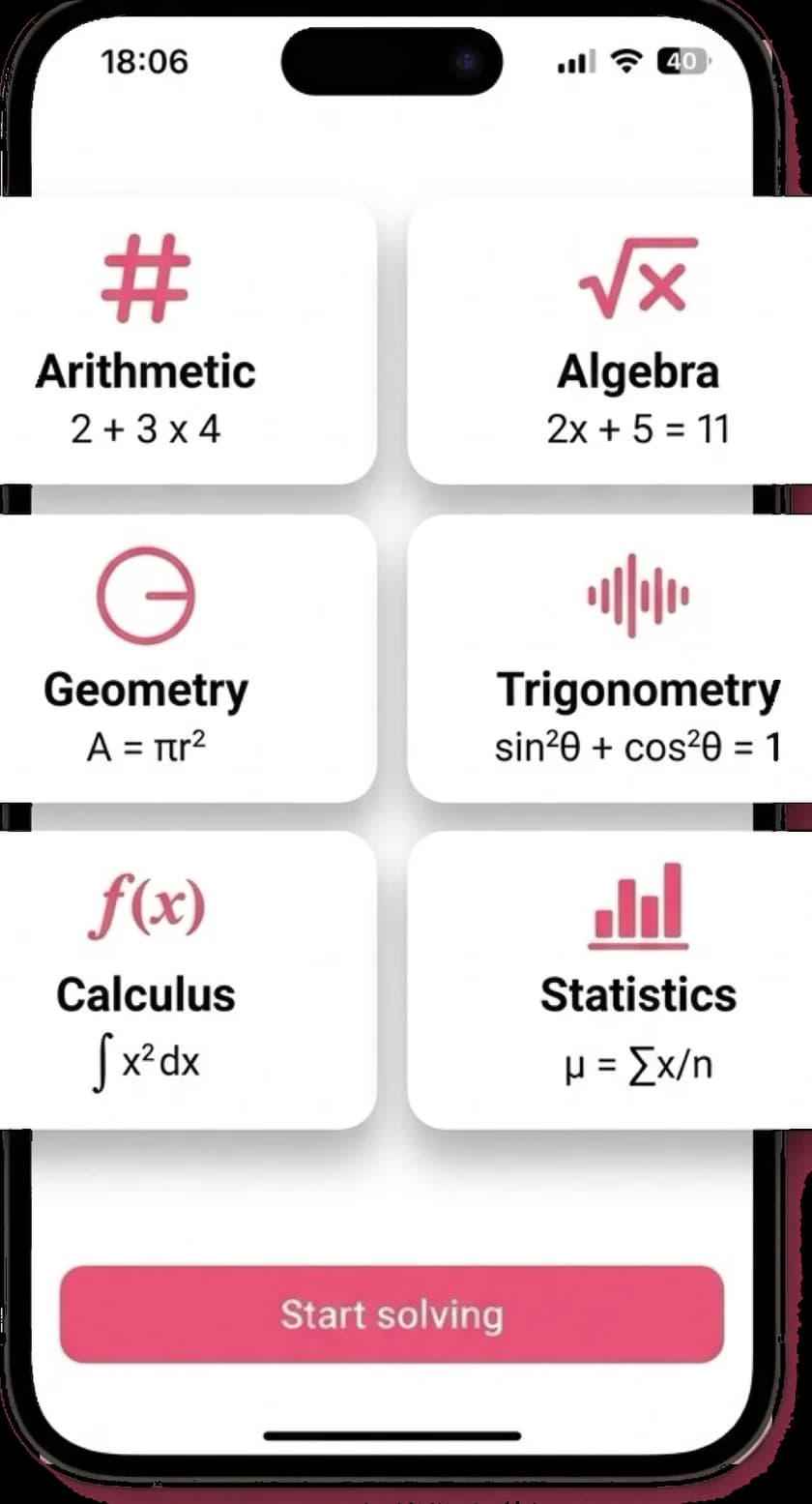
Does it cover the maths you are actually taking?
Most solvers are strong on linear algebra and arithmetic, because that is the bulk of the demand. Coverage thins out fast at calculus, statistics and word problems. If you are in college calculus, test the app on a real integral from your own problem set before subscribing rather than on the demo equation in the App Store screenshots. MathScans covers arithmetic through calculus and statistics, over 200 problem types.
04
Is the pricing honest about what is behind the paywall?
The common pattern is an app that scans and answers for free, then asks for money at exactly the moment you want to know how the answer was reached. That is worth knowing before you install, not after, so check the App Store listing for what the subscription actually unlocks. MathScans is a paid app and says so up front: 3 days free on the monthly plan, then $9.99 a month or $4.99 a week, cancellable any time in Settings.
Where MathScans is the right pick.
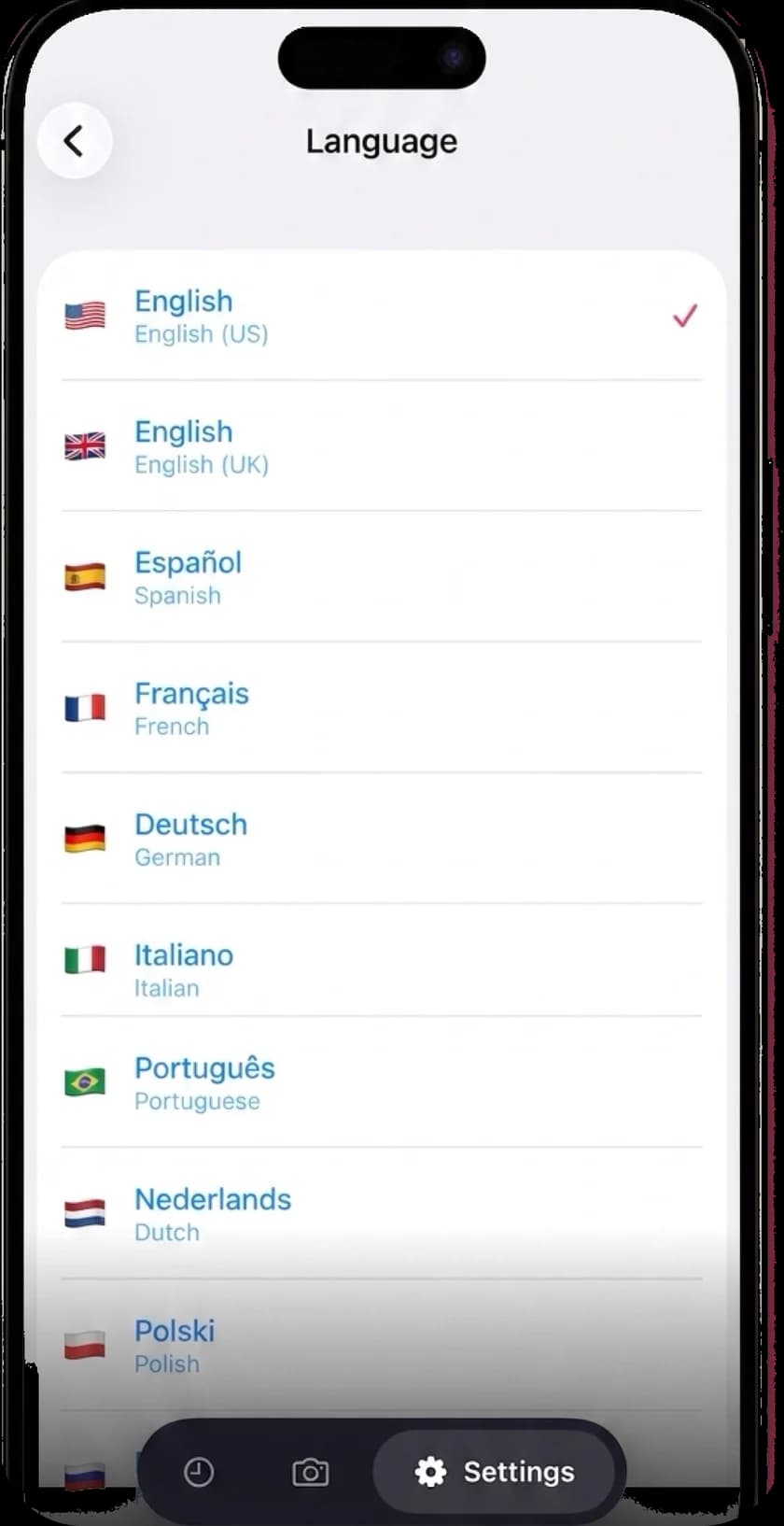
MathScans is built for one thing and built for it well: maths on iPhone, from your own handwriting, explained the way a good tutor would. If you want each step named and reasoned rather than listed, watched as an animation, and read aloud in your language, this is the app designed around exactly that.
The best way to judge it is on your own work. Start free for three days on the monthly plan, scan the problems you are actually stuck on, and see whether the explanations click before you are charged anything.
Questions about iPhone math solvers
- What is the best math solver app for iPhone?
- It depends on your constraint. If it is track record or budget, Photomath has a 4.8-star average from over 733,000 ratings and its free tier includes step-by-step explanations. If it is higher-level algebra and calculus from typed input, Symbolab is strong. If you want steps that animate and are read aloud in your language, that is what MathScans is built for. Try a free tier before paying for anything.
- Which iPhone do I need, and which iOS version?
- MathScans requires iOS 17 or later and runs on iPhone. There is no iPad-optimised version and no Android version at present.
- Can an iPhone solve math problems without an extra app?
- Partly. The built-in Math Notes feature in the Notes and Calculator apps evaluates expressions you write, and Live Text can capture an equation from a photo. Neither produces a worked, explained solution to an algebra or calculus problem, which is the gap a dedicated solver fills.
- Do these apps work without an internet connection?
- Generally no, including MathScans. Recognising the photo and generating the explanation both happen on servers, so solving needs a connection. In MathScans your last 10 scans are cached on the device so you can reread those offline, and voice narration uses on-device speech so it works without a connection.
- Is using a math solver app cheating?
- It depends entirely on how you use it, and it is a fair question to ask. Copying a final answer into your homework is the same as copying from a classmate. Working a problem, getting stuck, and then reading the explanation of the step you missed is ordinary studying, closer to a worked example in a textbook than to cheating. If you are unsure about a specific class, ask the teacher setting the work.
Test it on your own handwriting.
Try MathScans free for 3 days on the monthly plan. After that it is $9.99 a month or $4.99 a week. Cancel any time in Settings.